- Introduction – GHL Jira Workflow Automation Explained
- Quick Summary – Jira Workflow Automation
- Here are this week's HighLevel Updates 🚀
- What Is the New Jira Integration?
- Why GHL Jira Workflow Automation Matters
- How to Use GHL Jira Workflow Automation
- Practical Ways to Use GHL Jira Workflow Automation
- Pro Tips for Better GHL Jira Workflow Automation
- Results You Can Expect
- FAQs – Jira Workflow Automation
- Conclusion – Jira Workflow Automation
Introduction – GHL Jira Workflow Automation Explained
Most businesses have a process that begins the moment work needs to be handed over to another team. The problem is that those handoffs often rely on people instead of Jira Workflow Automation.
It happens every day in growing businesses. A deal is won, a customer reports an issue, or someone asks for a new feature. Before any work can begin, someone has to jump into Jira and create the right task.
The next step is usually manual. Someone opens Jira, fills out the details, assigns the work, and hopes nothing gets missed along the way. That process works… until people get busy.
Things become very different once your workload starts to grow. Managing a handful of requests is one thing. Managing hundreds every week is another story.
You either rely on your team to manually create, update, and manage Jira tickets, or valuable information gets missed, projects slow down, and communication between departments becomes inconsistent.
For many teams, connecting GoHighLevel and Jira meant finding a workaround. Some used third-party tools, while others simply handled the handoff themselves whenever work needed to move from the CRM into Jira.
Rather than asking your team to keep Jira updated by hand, GoHighLevel can now do much of that work automatically. As workflows progress, Jira can be updated in the background, helping every department stay aligned without the extra administration.
Connecting GHL to Jira is only part of the story. What really makes this update valuable is how it removes the manual work between teams, allowing projects to move forward without relying on someone to push them along.
Less manual work. Faster project delivery. Smarter GHL Jira Workflow Automation.
The latest GoHighLevel Changelog includes several other GHL feature updates that round out your daily workflow:
- Wait Action Enhancement: TikTok DM Replies
- India Recurring Mandate Support for Affiliate Indian Signup Pages
- Housecall Pro – More Workflow Actions & Triggers
- Email Services Dashboard for Agencies
- Email Sequences Now Available in Beta Labs
- Group Your Contacts by Source in Dashboards & Reporting
- MMLite Adoption Banner in Conversations
Keep reading for much more on all these updates and a deep dive into the Jira Workflow Automation feature!

Quick Summary – Jira Workflow Automation
Purpose: Learn how to connect GoHighLevel with Jira using the new native integration to automate issue management, project handoffs, and team collaboration.
Why It Matters: Manual project handoffs can slow down your business and increase the risk of missed tasks. GHL Jira Workflow Automation ensures work is automatically passed to the right team at the right time.
What You Get: You’ll discover how to connect Jira to GoHighLevel, use the new workflow triggers and actions, build practical automations, and apply best practices that save time and improve operational efficiency.
Time to Complete: Most users can connect Jira and build their first automation in approximately 15–30 minutes, depending on the complexity of their workflow.
Difficulty Level: Beginner to Intermediate. If you’re familiar with creating GoHighLevel workflows, setting up the Jira integration is straightforward using the native OAuth connection and built-in workflow actions.
Key Outcome: By implementing GHL Jira Workflow Automation, you’ll reduce manual administration, improve communication between teams, automate project handoffs, and build scalable workflows that keep your CRM and Jira perfectly synchronized.
Here are this week’s HighLevel Updates 🚀
Wait Action Enhancement: TikTok DM Replies
What’s New:
Instead of continuing after a fixed delay, your workflow can pause until someone replies to your TikTok DM.
Where in GHL:
Found in Automation → Workflows using the Wait action after sending a TikTok DM.
Automate marketing, manage leads, and grow faster with GoHighLevel.

Impact:
Your automation responds when someone actually joins the conversation, rather than after a timer runs out.
Recommended For:
Anyone using TikTok DMs to start conversations with potential customers.
India Recurring Mandate Support for Affiliate Indian Signup Pages
What’s New:
Supports recurring payment mandates for Indian affiliates, helping subscriptions comply with local banking requirements.
Where in GHL:
Available on Affiliate Program signup pages for users in India.
Impact:
Creates a smoother signup experience while reducing payment failures for recurring subscriptions.
Recommended For:
Agencies, SaaS businesses, and affiliate programs onboarding customers in India.
Housecall Pro – More Workflow Actions & Triggers
What’s New:
Adds new workflow triggers and actions for the Housecall Pro integration, giving you more ways to automate field service processes.
Where in GHL:
Inside Automation → Workflows when using the Housecall Pro integration.
Impact:
Expands automation possibilities between HighLevel and Housecall Pro, reducing manual work and improving operational efficiency.
Recommended For:
Home service businesses, field service companies, and agencies managing Housecall Pro clients.
Email Services Dashboard for Agencies
What’s New:
Introduces a centralized dashboard where agencies can monitor email services across their accounts.
Where in GHL:
Found in the Agency View under the new Email Services Dashboard.
Impact:
Makes it easier to monitor email health, identify issues, and manage deliverability from one place.
Recommended For:
Agency owners, support teams, and admins managing multiple client email services.
Email Sequences Now Available in Beta Labs
What’s New:
Introduces Email Sequences as a Beta Labs feature, providing another way to create structured email follow-up campaigns.
Where in GHL:
Enable it from Settings → Labs, then access Email Sequences after activation.
Impact:
Cuts down the time spent checking different areas just to see how your email services are performing.
Recommended For:
Marketers, agencies, coaches, and businesses running nurture campaigns or onboarding emails.
Group Your Contacts by Source in Dashboards & Reporting
What’s New:
Lets you organize contact reports based on where your leads originated.
Where in GHL:
Available within Dashboards & Reporting when viewing contact analytics.
Impact:
Makes it easier to compare lead sources and identify which marketing channels are producing the best results.
Recommended For:
Marketing teams, agency owners, and businesses tracking campaign performance across multiple lead sources.
MMLite Adoption Banner in Conversations
What’s New:
Displays a helpful banner inside Conversations to encourage users to adopt the new MMLite messaging experience.
Where in GHL:
Appears within the Conversations module for eligible accounts.
Impact:
Helps users discover and transition to MMLite while highlighting its benefits directly inside the messaging interface.
Recommended For:
Current HighLevel users exploring the latest messaging experience and teams preparing to migrate to MMLite.
What Is the New Jira Integration?
If Jira is already part of your daily workflow, you’ll probably recognise the extra admin that comes with keeping it updated. This new integration makes that process much easier by connecting it directly with GoHighLevel.
The new Jira integration connects directly with GoHighLevel Workflows, making it much easier to include Jira in your existing automations. Once your account is connected, workflow actions can send information to Jira automatically as each workflow progresses.
This means your customer journey doesn’t stop once a sale is made or a support conversation ends. Instead, GHL Jira Workflow Automation ensures the right information is passed directly to your project team at exactly the right time.
The update also introduces two new workflow triggers, making it possible to build automations based on activity happening inside Jira.
The available workflow triggers include:
- New Issue
- Updated Issue
These triggers allow GoHighLevel to react whenever work begins or changes inside Jira, opening the door to two-way automation between your CRM and your project management processes.
Alongside the triggers, GHL now supports a wide range of Jira workflow actions that can be added directly into your automations.
The available actions include:
- Find User
- Find Project
- Find Issue
- Create Issue
- Update Issue
- Add Comment
- Add Attachment
- Add Watcher
- Add Work Log
- Link Issue
- Move Issue to Sprint
Together, these actions give you much more than simple task creation. You can build complete workflows that create new issues from customer requests, update tickets as deals progress, upload files collected through forms, add internal notes for your development team, and automatically move work through your Jira projects without anyone needing to copy information manually.
Customer conversations often begin in GoHighLevel, while the work itself happens in Jira. This integration helps bridge that gap so your team spends less time copying information and more time getting work done.
Why GHL Jira Workflow Automation Matters
Creating Jira issues becomes second nature after a while. A new customer comes in, a support case needs attention, or another project is ready to begin, so someone opens Jira and creates the next ticket. It’s such a familiar process that most teams barely notice how often they’re doing it.
Opening Jira only takes a minute. What takes longer is fixing the mistakes that happen when everyone is busy. A missing attachment, the wrong assignee, or an incomplete ticket can slow work down before it even begins.
Connecting GoHighLevel with Jira helps remove those repetitive handoffs. Workflows can create or update issues automatically as customers move through your pipeline, so information reaches the right team without someone having to step in first.
The benefits become easier to see once your workload increases. New requests move through the same process every time, giving each team the information they need before they even open Jira.
How to Use GHL Jira Workflow Automation
Getting started with the new native Jira integration only takes a few minutes, especially if you’ve already built workflows in GoHighLevel. Once your Jira account is connected, you can automatically create issues, update existing tickets, add comments, upload attachments, and perform a range of other Jira actions without leaving the Workflow Builder.
In this guide, you’ll connect your Jira account, create a workflow, configure Jira triggers or actions, map the required fields, and test everything before publishing your automation. Since the integration is built directly into GoHighLevel Workflows, the setup process will feel familiar whether you’re creating a new workflow or updating an existing one.
- Connect Your Jira Account in GHL.
- Create Workflow in you Go High Level account.
- Add a Jira Trigger in your Workflow.
- Add Jira Settings Workflow Action.
- Configure Jira Settings Test and Publish Your Workflow.
Before you begin, make sure you’re logged into your GoHighLevel sub-account.
Step 01 – Connect Your Jira Account in GHL
- Before you can use any Jira triggers or workflow actions, you’ll need to authorise your Jira account.
1.1 Open Settings.
- From your GoHighLevel sub-account, navigate to the Settings area.
1.2 Select Integrations.
- Locate Jira from the available integrations.
1.3 Click Connect.
- You’ll be redirected to Jira, where you’ll sign in and authorise GoHighLevel using Jira’s secure OAuth connection.

Once connected, Jira will be available throughout the Workflow Builder.
Step 02 – Create Workflow in you Go High Level account
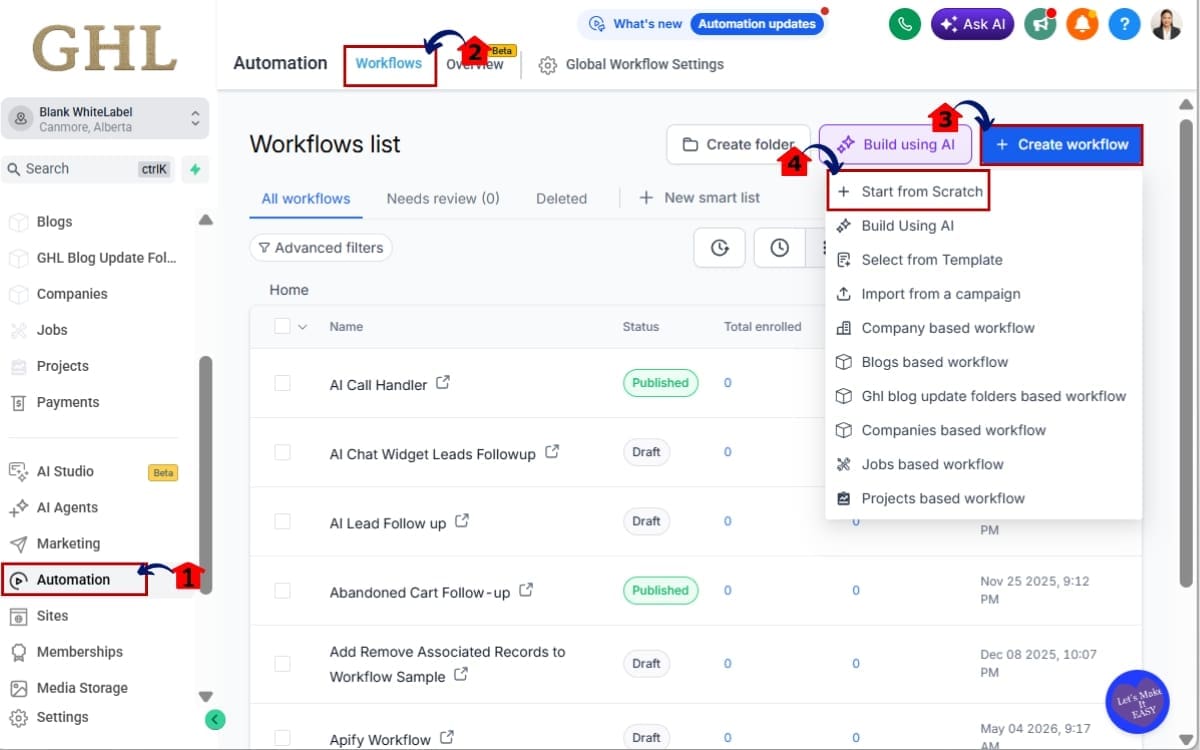
- Now it’s time to build the automation that will interact with Jira.
2.1 Click Automation.
- Open the Automation section from the left-hand navigation menu.
2.2 Select Workflows.
- You’ll see all of your existing workflows.
2.3 Click + Create Workflow.
- If you already have a workflow you’d like to enhance, simply open it instead.
2.4 Select Start from Scratch.
- You can also choose a workflow template if it better suits the process you’re building.
Step 03 – Add a Jira Trigger in your Workflow
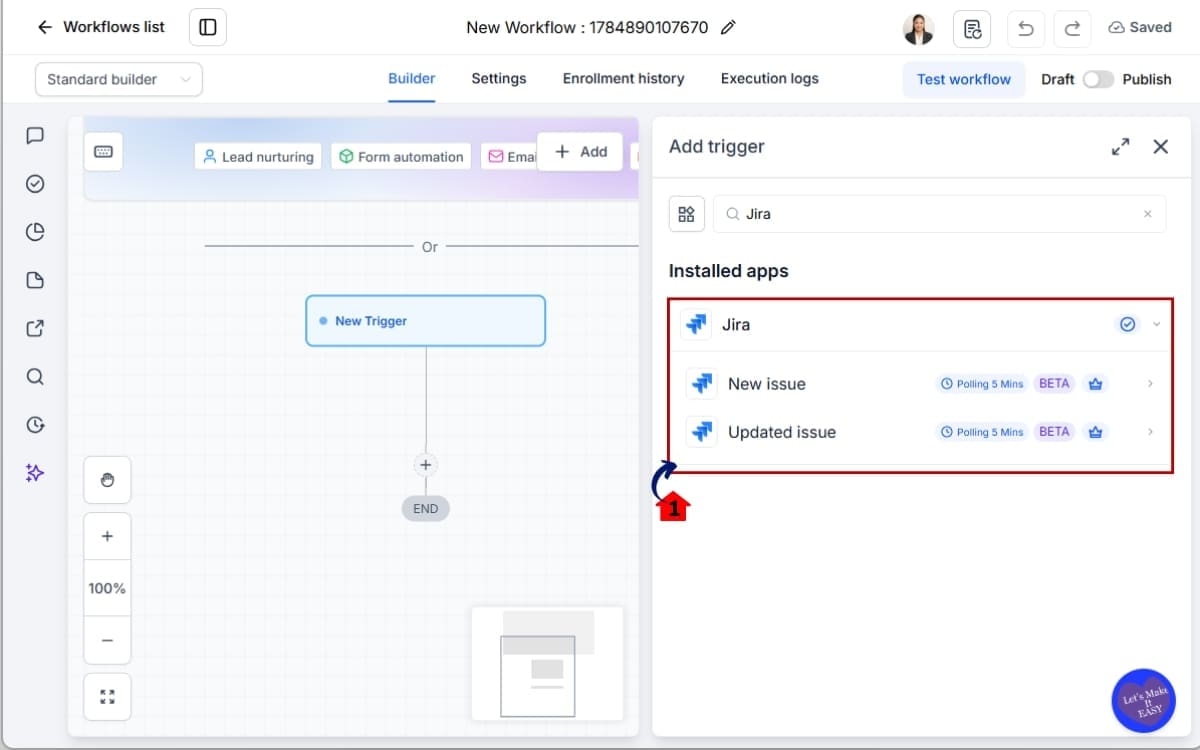
- Next, decide how Jira should be used within your workflow.
3.1 Click Add New Trigger.
- If you want Jira activity to start the workflow, search for one of the available Jira triggers.
Available triggers include:
– New Issue
– Updated Issue
Step 04 – Add Jira Settings Workflow Action
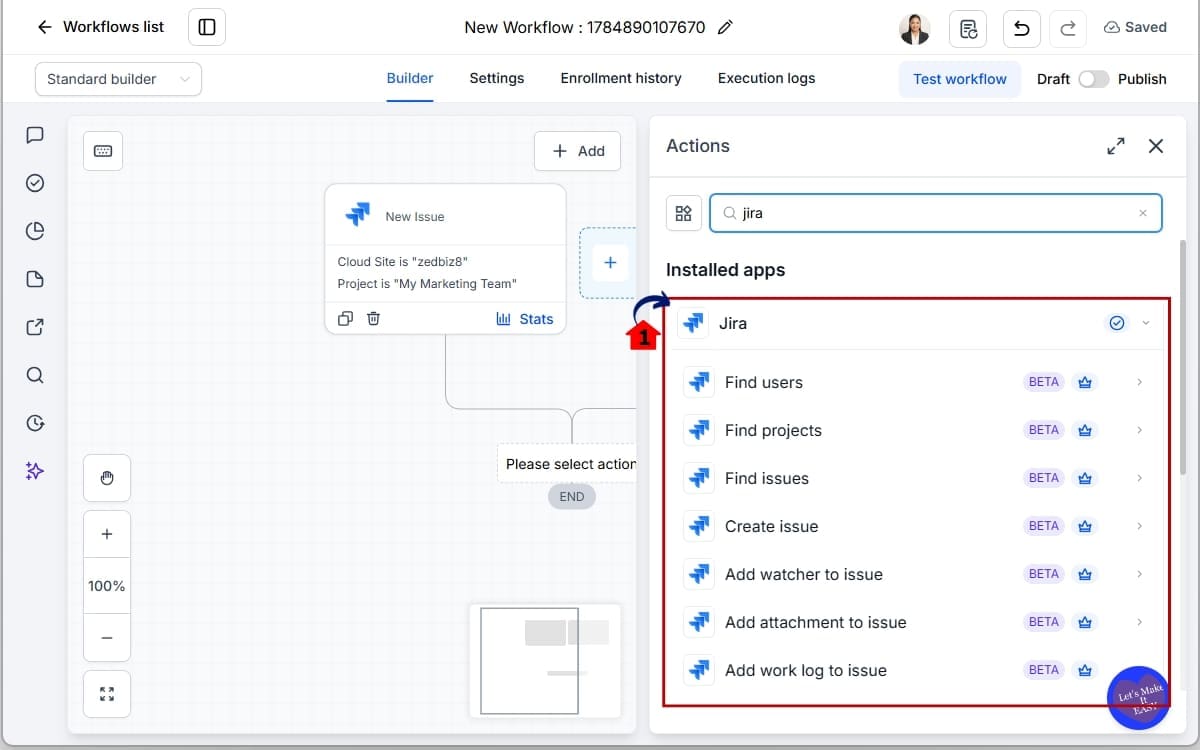
- Add the Jira Settings action to your workflow to define how Jira should handle new issues created by the automation.
4.1 Add a Workflow Action
If your workflow should send information to Jira instead, click the + icon and choose one of the available Jira actions. Available actions include:
- Create Issue
- Update Issue
- Find Issue
- Find Project
- Find User
- Add Comment
- Add Attachment
- Add Watcher
- Add Work Log
- Link Issue
- Move Issue to Sprint
Choose the trigger or action that best matches your automation.
Step 05 – Configure Jira Settings Test and Publish Your Workflow
- Once you’ve added your trigger or action, you’ll need to configure how Jira should behave.
5.1 Complete the required fields.
- Depending on the action you’ve selected, you may be asked to choose a project, issue type, assignee, sprint, or other Jira details. Before switching your automation on, it’s worth confirming everything works correctly.
5.2 Click Publish.
- Your workflow is now ready to communicate with Jira whenever the trigger conditions are met.
5.3 Test the automation.
- Run a test using sample data and confirm that Jira performs the expected action. Check that issues are created or updated correctly, comments appear in the right place, attachments upload successfully, and all mapped fields contain the correct information.
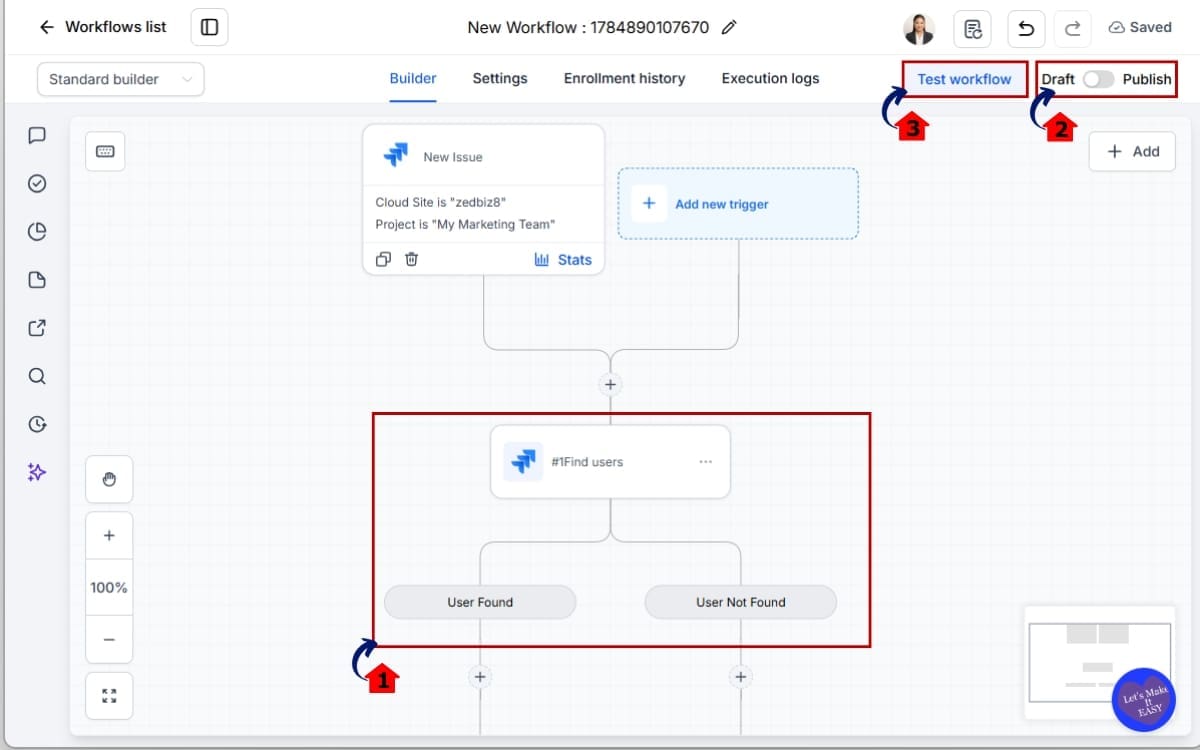
Spending a few minutes testing your workflow now can save a lot of troubleshooting later.
Once your first Jira workflow is running successfully, you’ll probably discover plenty of other opportunities to automate project handoffs, customer requests, onboarding tasks, and support processes. Small improvements like these reduce repetitive administration, improve collaboration between teams, and help your business scale with far less manual effort.
Practical Ways to Use GHL Jira Workflow Automation
Once you’ve connected Jira to GoHighLevel, the real value comes from how you apply it to your everyday business processes. Instead of using Jira as a standalone project management tool, you can make it an automated extension of your customer journey.
Here are some practical ways to put GHL Jira Workflow Automation to work.
Automatically Create Development Tasks
When a customer requests a new feature or reports a software bug, your workflow can instantly create a Jira issue without anyone needing to log into Jira.
The workflow handles the transfer of information for you. Customer details, descriptions, and supporting notes are added to the Jira issue as it’s created, so there’s less waiting around before work can begin.
Streamline Client Onboarding
Winning a new client often kicks off a long list of implementation tasks.
Rather than assigning these manually, GHL can automatically create a Jira issue or project task the moment an opportunity moves to the Won stage. This ensures your onboarding team is notified immediately and every new client follows the same structured implementation process.
Keep Support and Development Teams Connected
Support teams frequently identify bugs that need to be escalated to developers.
Support teams don’t need to create Jira issues by hand anymore. When the right conditions are met, the workflow can create the issue automatically and include the customer details, comments, and files your developers are expecting to see.
Automatically Update Existing Jira Issues
Projects rarely stay the same from start to finish. As customer information changes inside GoHighLevel, your workflows can update existing Jira issues with new comments, revised details, additional attachments, or updated priorities. This keeps everyone working from the latest information without duplicate data entry.
Improve Project Visibility
Because Jira actions are built directly into GHL Workflows, every department stays aligned.
Sales teams know when implementation has started. Customer success teams can see project progress. Developers receive accurate information without manual handoffs. Everyone works from the same automated process instead of relying on separate systems and manual communication.
Build Complete End-to-End Automations
The biggest advantage of GHL Jira Workflow Automation is that it doesn’t need to operate on its own.
Most businesses don’t rely on a single automation. Customer communication, project management, and internal updates usually happen together. With Jira available inside GoHighLevel Workflows, those actions can all run as part of the same sequence.
The result is a business that spends less time managing repetitive admin and more time delivering work. Whether you’re running a marketing agency, software company, customer support desk, or service business, GHL Jira Workflow Automation helps ensure every customer request reaches the right people at exactly the right time.
Pro Tips for Better GHL Jira Workflow Automation
Building your first automation is a great start, but following a few best practices will help you create workflows that are easier to manage, more reliable, and ready to scale as your business grows.
Here are some practical tips to get the most out of GHL Jira Workflow Automation.
Use Clear Workflow Conditions
Not every customer interaction needs a Jira issue. Before adding a Jira action, use workflow filters and If/Else conditions to make sure the automation only runs when specific criteria are met.
For example, you might only create a Jira issue for high-priority support requests, implementation projects, or feature requests. This keeps your Jira workspace organised and prevents unnecessary tickets from being created.
Standardise Your Jira Issues
Consistency makes projects easier to manage.
Where possible, use predefined issue types, naming conventions, labels, and priorities across all your automations. A standard format helps your team quickly understand the purpose of each issue and reduces confusion as more workflows are added.
Map the Right Information
The more useful information you send to Jira, the less manual work your team has to do later.
Take advantage of GoHighLevel’s custom fields and workflow variables to automatically populate issue summaries, descriptions, customer details, contact information, internal notes, and attachments. Well-structured issues help your project team start work immediately without having to chase additional information.
Always Test Before Publishing
Even a simple workflow should be tested before it’s made live.
Run several test scenarios to confirm that issues are created correctly, updates are applied to the right records, attachments upload successfully, and comments appear where expected. Spending a few extra minutes testing can save hours of troubleshooting later.
Combine Jira with Other Workflow Actions
One of the biggest strengths of GoHighLevel is that Jira actions can become just one step in a much larger automation.
For example, a single workflow could send a confirmation email to the customer, notify your team in Slack, update an opportunity, create a Jira issue, assign an internal task, and trigger follow-up reminders—all without any manual intervention.
Review and Optimise Regularly
Your workflows shouldn’t remain static.
As your business evolves, review your automations regularly to identify opportunities for improvement. You may discover new stages to automate, additional Jira actions to include, or repetitive tasks that can be eliminated entirely.
Small improvements made over time can significantly increase the efficiency of your operations.By following these best practices, GHL Jira Workflow Automation becomes more than just a convenient integration.
It becomes a reliable business system that connects your sales, support, operations, and development teams through consistent, automated processes that save time, reduce errors, and improve collaboration.
Results You Can Expect
Once you’ve implemented GHL Jira Workflow Automation, the benefits extend far beyond simply saving a few minutes here and there. Every automated workflow helps create a more efficient, consistent, and scalable way of managing projects across your business.
One of the first improvements you’ll notice is faster project handoffs.
Instead of waiting for someone to manually create a Jira issue, assign a task, or notify the next department, those actions happen automatically. As soon as a workflow reaches the right stage, your development, implementation, or support team can begin working without unnecessary delays.
You’ll also reduce manual administration.
Creating tickets, updating issues, adding comments, uploading attachments, and logging work are all repetitive tasks that consume valuable time. By automating these processes, your team can focus on solving customer problems and delivering projects instead of managing paperwork.
Another major benefit is improved accuracy.
Manual data entry often leads to missing information, inconsistent formatting, or forgotten tasks. With GHL Jira Workflow Automation, every issue follows the same process, ensuring your team receives complete and consistent information every time. That means fewer mistakes, less rework, and smoother collaboration between departments.
As your business grows, automation becomes even more valuable.
Whether you’re handling ten projects a month or hundreds, your workflows continue to operate the same way. New customer requests, onboarding projects, support escalations, and internal tasks can all flow into Jira automatically without increasing your team’s administrative workload.
Your customers benefit too.
Faster internal communication means quicker responses, shorter project delays, and a more professional experience from the first enquiry through to project completion. When every team has immediate access to the information they need, work moves forward with fewer bottlenecks and greater confidence.
Ultimately, GHL Jira Workflow Automation helps transform disconnected business processes into one streamlined system. By connecting your CRM with your project management platform, you create reliable workflows that improve productivity, strengthen collaboration, and give your team more time to focus on delivering exceptional results instead of repetitive manual tasks.
FAQs – Jira Workflow Automation
Conclusion – Jira Workflow Automation
Manual project handoffs have always been one of the biggest bottlenecks in growing businesses. Every time someone has to remember to create a Jira issue, update a ticket, or notify another team, there’s an opportunity for delays, missed information, and inconsistent processes.
That’s exactly what the new native Jira integration in GoHighLevel is designed to eliminate.
With GHL Jira Workflow Automation, your CRM and project management platform can now work together automatically. Instead of relying on manual processes or third-party connectors, your workflows can create issues, update tickets, add comments, upload attachments, log work, and move projects through Jira without leaving GoHighLevel.
The result is a smoother experience for everyone involved.
Sales teams can hand projects over instantly. Support teams can escalate issues without extra administration. Operations teams can standardise their processes, while developers receive complete and accurate information from the moment work begins. Every department benefits from faster communication, fewer manual tasks, and greater consistency.
Perhaps the biggest advantage is that this integration grows with your business.
Whether you’re managing a handful of client projects or coordinating hundreds of tasks across multiple teams, GHL Jira Workflow Automation helps ensure every workflow follows the same reliable process. That means less time spent on repetitive admin and more time focused on delivering exceptional results for your customers.
If your business already relies on Jira to manage projects, now is the perfect time to connect it with GoHighLevel. Start by automating one simple workflow, test the results, and build from there. Before long, you’ll have a connected system that saves time, improves collaboration, and keeps every project moving forward automatically.
Smarter workflows. Better teamwork. Powerful GHL Jira Workflow Automation.
Scale Your Business Today.
Streamline your workflow with GoHighLevel’s powerful tools.