- RCS Workflow Messaging Is Here in GHL
- Quick Summary – RCS Workflow Messaging
- Here are this week's HighLevel Updates 🚀
- Why RCS Workflow Messaging Matters
- How to Use RCS Workflow Messaging in GHL
- Pro Tips for RCS Workflow Messaging
- What RCS Workflow Messaging Means for Your Business
- FAQs – RCS Workflow Messaging
- RCS Workflow Messaging Makes GHL More Interactive
RCS Workflow Messaging Is Here in GHL
RCS Workflow Messaging just made GoHighLevel automations a lot more interactive. You can now send standard RCS messages and build richer interactive RCS experiences directly inside your GHL Workflows.
GHL Workflows are great at keeping communication moving without someone on your team handling every step. But there’s a difference between automating a message and creating an interactive conversation. Until now, most Workflow messaging has leaned heavily toward the first one.
That’s where the new RCS Workflow actions come in.
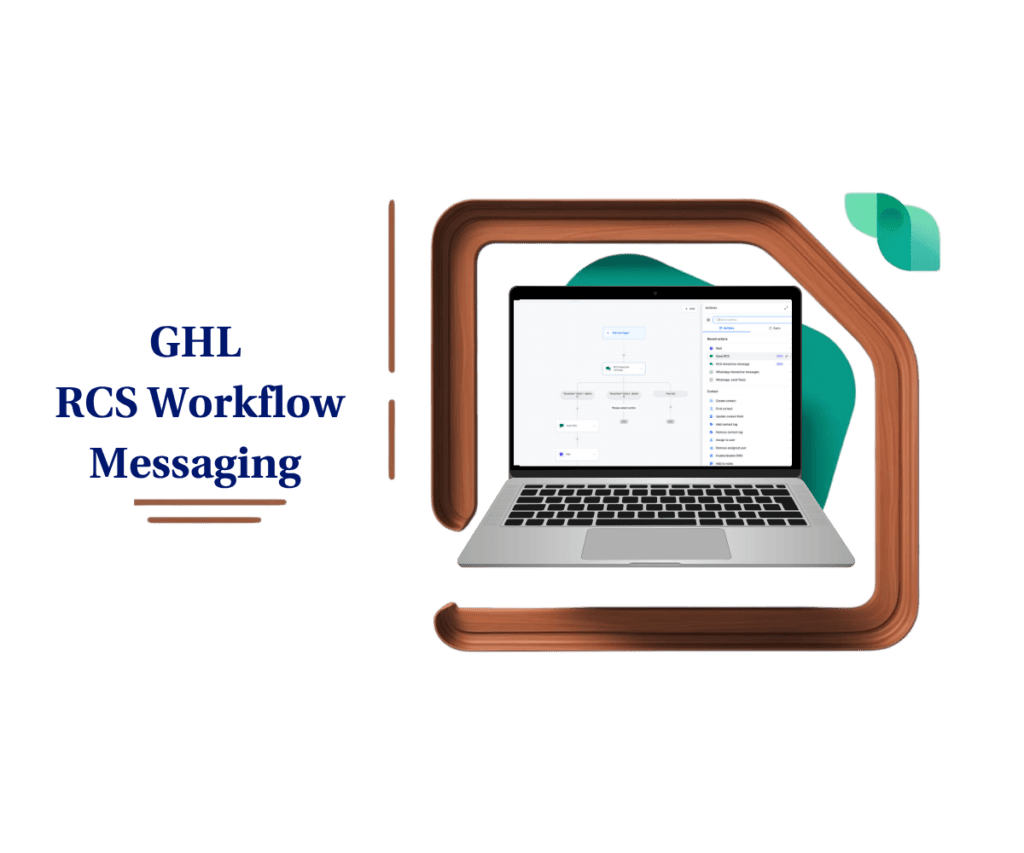
Open a Workflow and you can now add either the Send RCS or RCS Interactive Message action. Send RCS handles standard RCS messages, while RCS Interactive Message lets you build richer experiences using features like rich cards and buttons.
RCS Workflow Messaging gets even more useful when customers start interacting with those messages. Their interactions can trigger different Workflow paths, giving you a way to guide contacts through a more personalized customer journey based on what they do.
That could mean sending an appointment reminder and continuing the automation based on the customer’s interaction. Or you could build promotional campaigns, follow-up sequences, and customer engagement journeys that give contacts a clearer way to choose what happens next.
And RCS isn’t limited to Workflows during the Private Beta. Beta users can also access 1:1 RCS messaging from Conversations, bulk RCS messaging for customer outreach, and RCS template creation and management.
There is one important limitation right now. RCS is still in Private Beta, so these features won’t be available to every GHL user yet. HighLevel says users interested in early access can contact their Customer Success Manager or the HighLevel team about joining the beta.
RCS Workflow Messaging gives agencies a new way to connect automation with richer customer conversations. Instead of simply sending another automated message, you can build interactive experiences that guide contacts through the next stage of their journey.
For agencies building automated customer journeys in GHL, that’s a useful step forward. You can keep more of the conversation inside your existing Workflows while giving customers a more modern and interactive way to engage.
The latest GoHighLevel Changelog includes several other GHL feature updates that round out your daily workflow:
- Wait Action Enhancement: TikTok DM Replies
- India Recurring Mandate Support for Affiliate Indian Signup Pages
- Housecall Pro – More Workflow Actions & Triggers
- Email Services Dashboard for Agencies
- Email Sequences Now Available in Beta Labs
- Group Your Contacts by Source in Dashboards & Reporting
- MMLite Adoption Banner in Conversations
Keep reading for much more on all these updates and a deep dive into the RCS Workflow Messaging feature!
Quick Summary – RCS Workflow Messaging
Purpose: RCS Workflow Messaging lets you add standard and interactive RCS messages directly to GoHighLevel Workflows.
Why It Matters: You can create richer customer conversations and use customer interactions to trigger different Workflow paths automatically.
What You Get: GHL adds Send RCS and RCS Interactive Message actions, with support for interactive experiences using rich cards and buttons.
Time To Complete: You can add a basic RCS message to an existing Workflow in just a few minutes once your account has access to the RCS Private Beta.
Difficulty Level: Beginner to Intermediate. Basic messages are straightforward, while interactive messages and multiple Workflow paths may take more planning.
Key Outcome: RCS Workflow Messaging helps you turn standard automated messages into interactive customer journeys where customer actions can help determine what happens next.
Availability: RCS is currently in Private Beta, so you’ll need beta access before the new Workflow actions are available in your GHL account.
Here are this week’s HighLevel Updates 🚀
Wait Action Enhancement: TikTok DM Replies
What’s New:
Instead of continuing after a fixed delay, your workflow can pause until someone replies to your TikTok DM.
Where in GHL:
Found in Automation → Workflows using the Wait action after sending a TikTok DM.
Automate marketing, manage leads, and grow faster with GoHighLevel.
Impact:
Your automation responds when someone actually joins the conversation, rather than after a timer runs out.
Recommended For:
Anyone using TikTok DMs to start conversations with potential customers.
India Recurring Mandate Support for Affiliate Indian Signup Pages
What’s New:
Supports recurring payment mandates for Indian affiliates, helping subscriptions comply with local banking requirements.
Where in GHL:
Available on Affiliate Program signup pages for users in India.
Impact:
Creates a smoother signup experience while reducing payment failures for recurring subscriptions.
Recommended For:
Agencies, SaaS businesses, and affiliate programs onboarding customers in India.
Housecall Pro – More Workflow Actions & Triggers
What’s New:
Adds new workflow triggers and actions for the Housecall Pro integration, giving you more ways to automate field service processes.
Where in GHL:
Inside Automation → Workflows when using the Housecall Pro integration.
Impact:
Expands automation possibilities between HighLevel and Housecall Pro, reducing manual work and improving operational efficiency.
Recommended For:
Home service businesses, field service companies, and agencies managing Housecall Pro clients.
Email Services Dashboard for Agencies
What’s New:
Introduces a centralized dashboard where agencies can monitor email services across their accounts.
Where in GHL:
Found in the Agency View under the new Email Services Dashboard.
Impact:
Makes it easier to monitor email health, identify issues, and manage deliverability from one place.
Recommended For:
Agency owners, support teams, and admins managing multiple client email services.
Email Sequences Now Available in Beta Labs
What’s New:
Introduces Email Sequences as a Beta Labs feature, providing another way to create structured email follow-up campaigns.
Where in GHL:
Enable it from Settings → Labs, then access Email Sequences after activation.
Impact:
Cuts down the time spent checking different areas just to see how your email services are performing.
Recommended For:
Marketers, agencies, coaches, and businesses running nurture campaigns or onboarding emails.
Group Your Contacts by Source in Dashboards & Reporting
What’s New:
Lets you organize contact reports based on where your leads originated.
Where in GHL:
Available within Dashboards & Reporting when viewing contact analytics.
Impact:
Makes it easier to compare lead sources and identify which marketing channels are producing the best results.
Recommended For:
Marketing teams, agency owners, and businesses tracking campaign performance across multiple lead sources.
MMLite Adoption Banner in Conversations
What’s New:
Displays a helpful banner inside Conversations to encourage users to adopt the new MMLite messaging experience.
Where in GHL:
Appears within the Conversations module for eligible accounts.
Impact:
Helps users discover and transition to MMLite while highlighting its benefits directly inside the messaging interface.
Recommended For:
Current HighLevel users exploring the latest messaging experience and teams preparing to migrate to MMLite.
Why RCS Workflow Messaging Matters
RCS adds another layer to your GHL automations. Customers don’t have to simply receive a message and leave it at that. You can give them ways to interact with the message and help move the conversation forward.
That matters when you’re building automated customer journeys. A reminder, promotion, or follow-up doesn’t always need the same next step for every contact. With interactive RCS messages, customer interactions can trigger different Workflow paths and move each person through a more relevant journey.
Take appointment reminders. Instead of firing off another plain message, you could use RCS to give the customer buttons they can interact with. Their choice can then send them down the appropriate path in your GHL Workflow.
And it doesn’t stop with reminders. RCS could fit into sales offers, lead nurturing, or everyday customer communication. The customer gets a clearer way to engage, while your GHL Workflow takes care of the next move.
This is especially useful for agencies managing automation across multiple clients. You can build richer communication into the Workflows you’re already using instead of treating RCS as a completely separate process.
The real benefit of RCS Workflow Messaging is the combination of communication and automation. Your messages can become part of the customer journey rather than simply another notification sent along the way.
For agencies, marketers, sales teams, and businesses already using GHL Workflows heavily, that creates another practical way to automate customer engagement while keeping the experience more interactive.
How to Use RCS Workflow Messaging in GHL
RCS Workflow Messaging is built directly into the GHL Workflow builder, so you can add it to the automations you’re already using. You can send a standard RCS message or create a more interactive experience using rich cards and buttons.
Before you start, remember that RCS is currently in Private Beta. You’ll need access to the RCS Private Beta before the new Workflow actions are available in your account.
- Access Workflows in GoHighLevel.
- Add an RCS Workflow Action.
- Build Your Customer Journey.
To start, make sure you are logged in to the correct GoHighLevel sub-account.
Step 01 – Access Workflows in GoHighLevel
- Start by logging in to the GoHighLevel sub-account where you want to build your RCS automation.
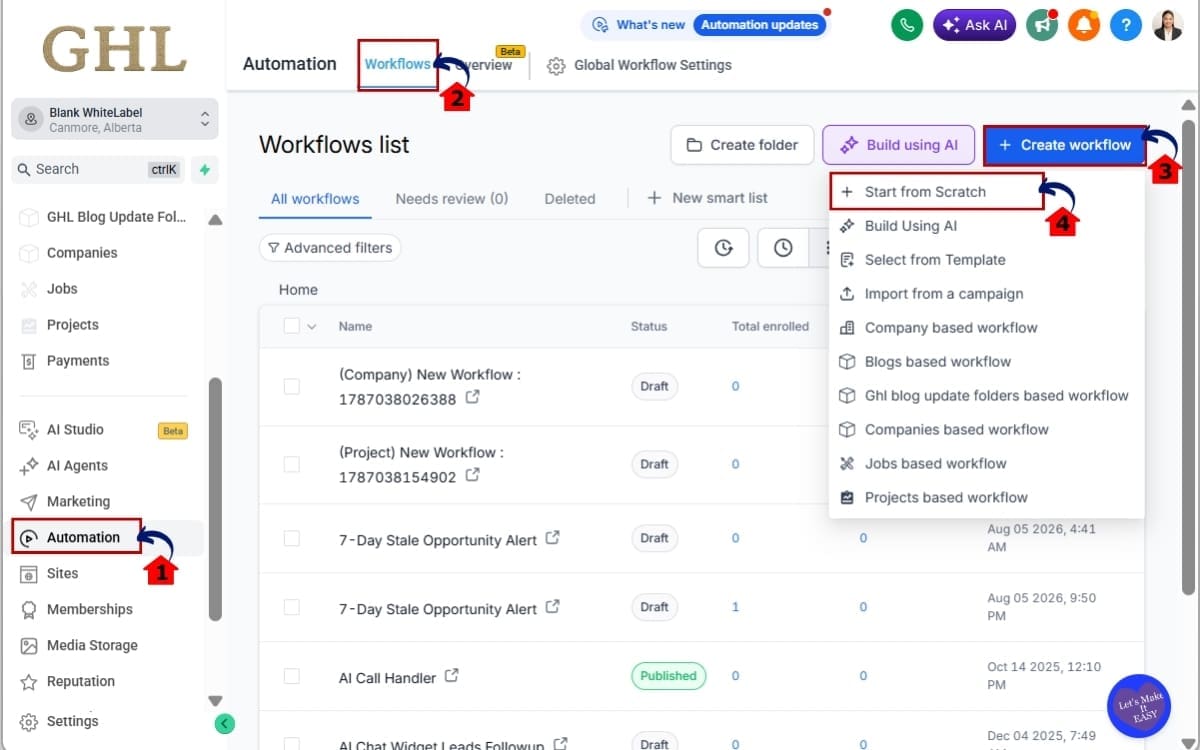
1.1 Go to the main menu on the left side of your screen. Click Automation.
- This opens the Automation area where you can access and manage your GHL Workflows.
1.2 Open the Workflows section.
- This is where you’ll find your existing automations and the option to create a new Workflow.
1.3 Create a new Workflow where you want to use RCS messaging.
- Starting a new Workflow gives you a clean setup for building your RCS customer journey from the beginning.
1.4 Click Start from Scratch.
- This opens a blank Workflow so you can add your triggers, RCS actions, and follow-up steps exactly where you need them.
Step 02 – Add an RCS Workflow Action
- Now you need to decide where the RCS message should appear in your automation and what type of RCS experience you want to create.
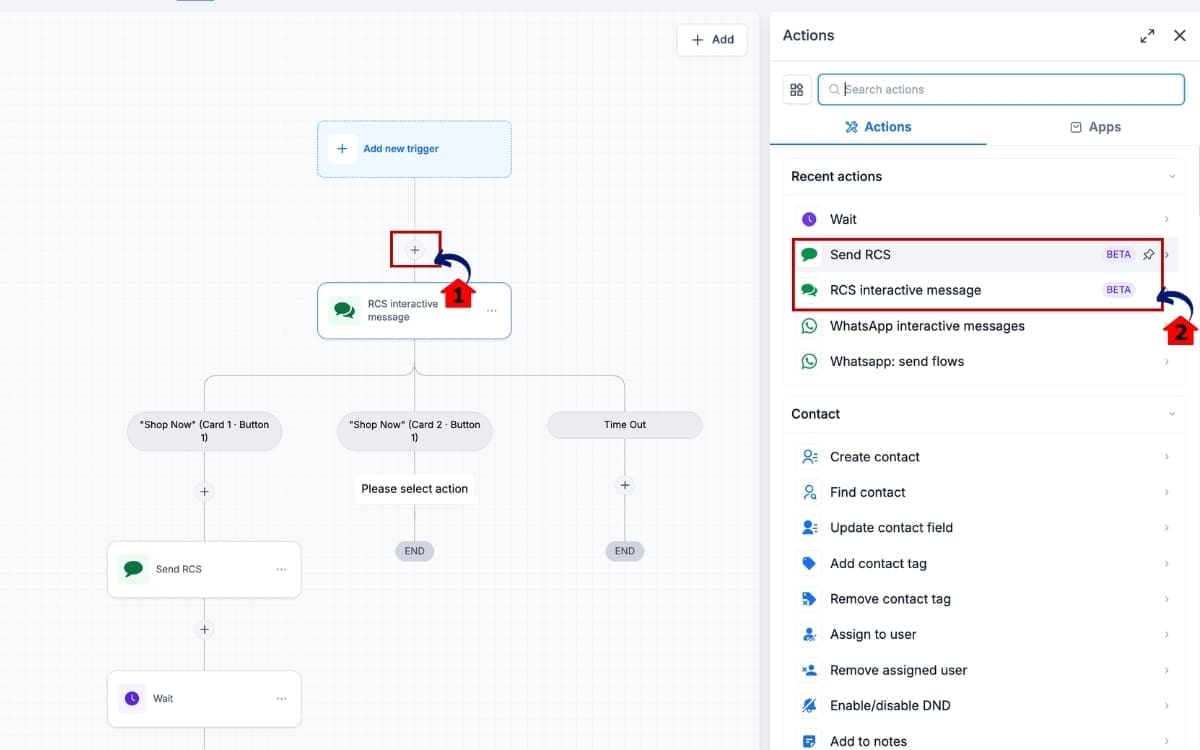
2.1 Add a new Workflow action.
- Click the + button at the point in your Workflow where you want the RCS message to be sent.
2.2 Choose either Send RCS or RCS Interactive Message.
- GHL gives you two RCS actions, depending on whether you want a standard message or a more interactive customer experience.
Step 03 – Build Your Customer Journey
- This is where RCS Workflow Messaging becomes more useful, because customer interactions can help decide what happens next inside the Workflow.
3.1 Decide which customer interactions should affect what happens next.
- Choose the customer actions or responses that should change the direction of the automation.
3.2 Create the appropriate Workflow paths for those interactions.
- Build separate paths so different customer interactions can lead to different follow-up journeys.
3.3 Add the follow-up actions you want GHL to run on each path.
- Add the next actions for each branch, such as another message, follow-up step, reminder, or other Workflow action that fits the customer’s choice.
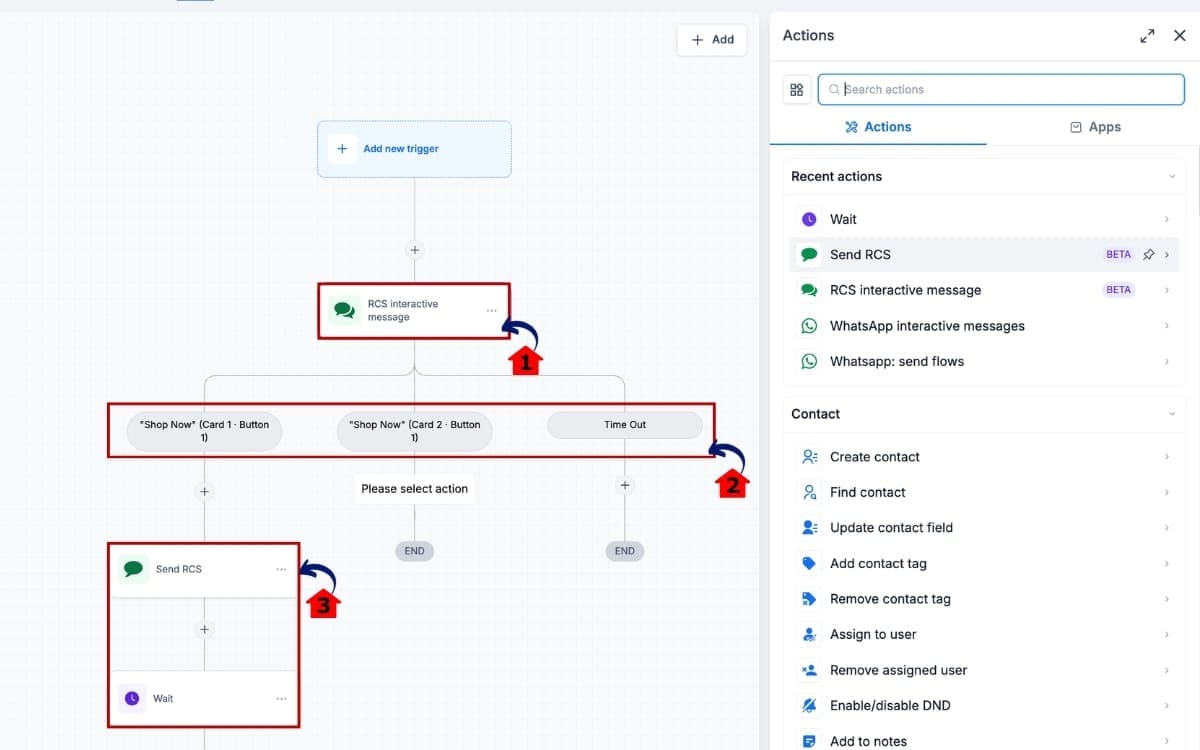
For example, you could send an interactive RCS message as part of a follow-up campaign. Based on the customer’s interaction, GHL can move them through a different Workflow path and continue the appropriate automation.
Your RCS automation is now part of your existing GHL customer journey. As you start using it, keep an eye on how the overall experience works and refine your Workflow when needed.
Pro Tips for RCS Workflow Messaging
RCS Workflow Messaging gives you more ways to build interactive automations, but that doesn’t mean every Workflow needs to become complicated. The best customer journeys are usually the ones that make the next step obvious.
Don’t overbuild this on day one. Find one Workflow where RCS would actually be useful and try it there first. An appointment reminder or lead follow-up is an easy place to start. Once you’ve got that working, you can tackle the fancier stuff.
Don’t add buttons just because RCS lets you. Give people a couple of clear choices that actually lead somewhere. If an option doesn’t make the next step easier, leave it out.
Think about what happens after each interaction. The real advantage of RCS Workflow Messaging isn’t just sending a richer-looking message. It’s being able to trigger different Workflow paths based on how the customer interacts with that message.
Not every customer needs the same follow-up. Someone who shows interest in your offer should probably get a different next step than someone who chooses another option. Let their interaction decide where GHL takes them next.
It’s also worth testing the complete journey before using it with a live audience. Check the message, buttons, Workflow paths, and follow-up actions together. A great-looking RCS message isn’t much help if the next Workflow step sends the customer in the wrong direction.
Finally, remember that RCS Workflow Messaging is still part of HighLevel’s Private Beta. Start experimenting if you have access, but keep that beta status in mind before building it into automations your clients depend on every day.
What RCS Workflow Messaging Means for Your Business
RCS Workflow Messaging gives businesses a practical way to turn automated messages into more interactive customer journeys. Instead of sending a message and waiting for someone on your team to handle the next step, GHL can use the customer’s interaction to continue the automation.
Think about a lead follow-up Workflow. A new lead enters your automation and receives an interactive RCS message. The customer interacts with the message, and that interaction determines which Workflow path they follow next.
From there, GHL can continue running the appropriate automation. You’re not just sending a better-looking message. You’re connecting that message to what happens next in the customer journey.
There are plenty of places to put this to work. A reminder, special offer, or lead follow-up could all become more interactive, while GHL takes care of the steps you’d normally have to manage afterward.
For agencies, RCS Workflow Messaging could also become another automation service you build into client systems. Rather than creating the same basic messaging sequences for every business, you can design richer journeys around how each client wants customers to interact with them.
The biggest opportunity is efficiency. Your team can automate more of the communication process while still giving customers choices along the way.
And because these new RCS actions live directly inside Workflows, you can build them into the GHL automations you already use instead of managing the customer journey through a completely separate system.
RCS is still in Private Beta, so it’s early days. But for agencies that want to build more interactive customer journeys inside GoHighLevel, RCS Workflow Messaging is definitely one to watch.
FAQs – RCS Workflow Messaging
RCS Workflow Messaging Makes GHL More Interactive
RCS Workflow Messaging gives GoHighLevel users another way to build customer communication directly into their automations. With the new Send RCS and RCS Interactive Message actions, your Workflows can do more than simply send another message.
You can create richer RCS experiences with cards and buttons, then use customer interactions to trigger different Workflow paths. That opens the door to more interactive reminders, promotions, follow-ups, and customer engagement without pulling the process outside GHL.
The message itself is only the starting point. What makes RCS interesting is what your Workflow can do after someone interacts with it. Their choice can kick off the next part of the automation without your team having to jump in.
Private Beta users also have access to 1:1 RCS messaging through Conversations, bulk RCS messaging, and RCS template creation and management. That makes the new Workflow actions part of a much broader RCS rollout inside HighLevel.
Just remember that RCS is still in Private Beta. If you want early access, HighLevel says to reach out to your Customer Success Manager or contact the HighLevel team about joining the beta.
And there’s more coming. HighLevel says RCS onboarding flows are planned to simplify sender registration and provisioning, with General Availability currently targeted for the end of Q3 2026.
If you already have Private Beta access, start with one simple RCS Workflow Messaging automation and see where interactive messaging can improve your customer journey.
How would you use RCS inside your GHL Workflows—lead follow-ups, appointment reminders, promotions, or something completely different?
Scale Your Business Today.
Streamline your workflow with GoHighLevel’s powerful tools.